Riggs Hotel Rooftop
Art Direction, Spatial Identity, Concept Visualization
Midjourney, Revit, Nano Banana, Adobe CC
Riggs Hotel
Washington, DC, USA
Perkins Eastman
2018-2020

Insight
Perched atop a Beaux-Arts landmark in the heart of Washington, D.C., the Riggs Hotel Rooftop aimed to redefine how heritage architecture could embrace contemporary lifestyle culture. The challenge wasn’t merely spatial—it was emotional. It needed to evolve from a historic relic into a refined destination that captured the city’s rhythm of nighttime sophistication, skyline views, and social energy. The goal was to elevate the space into a luxury hospitality experience—where architecture, atmosphere, and urban lifestyle converge.
Idea
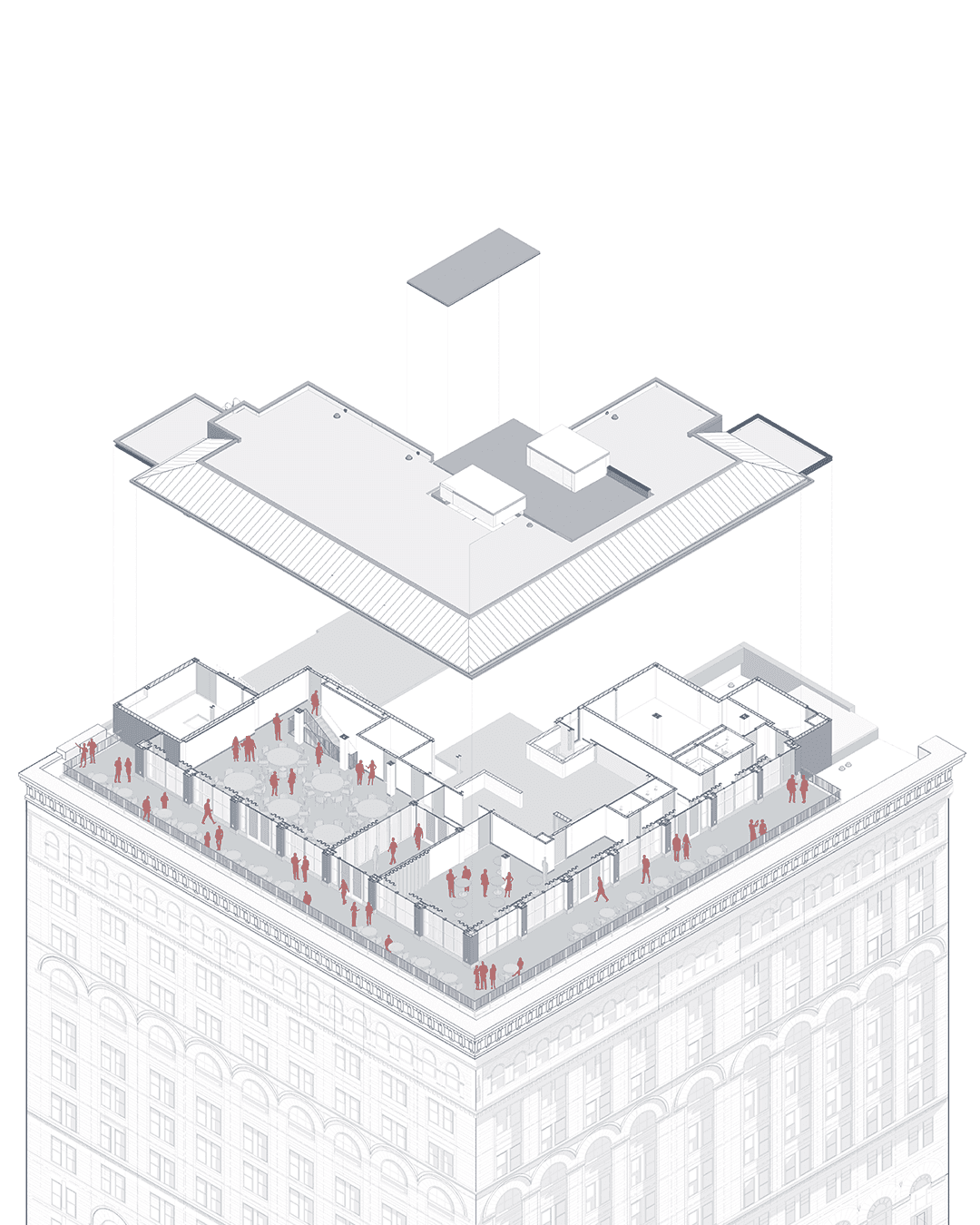
Inspired by European glass conservatories and urban greenhouse lounges, the rooftop was envisioned as a transparent pavilion—lightweight, elegant, and immersive. Steel and glass formed its architectural vocabulary, while brass tones, warm reflections, and layered lighting curated a cinematic mood designed for twilight and nightlife. Setbacks preserved the street-level silhouette, but from above, the pavilion framed panoramic views of Penn Quarter and the Capitol. Using moodboards, geometry studies, and atmospheric storytelling, the concept moved beyond structure—crafting a refined lifestyle setting where light, views, and social presence shape identity.


Impact
Riggs Rooftop now stands as a sophisticated social landmark—intimate yet metropolitan, historic yet modern. It introduced a new language of luxury hospitality in D.C., transforming a heritage site into a destination for elevated nightlife, conversation, and skyline connection. More than a rooftop, it became a lifestyle experience—one that demonstrates how spatial identity emerges not just from architecture, but from mood, memory, and the cultural desire to see and be seen.


