Shenzhen Natural History Museum
Design Concept, Spatial Storytelling, 3D Modeling & Visualization
Rhino, Photoshop, Vray, ComfyUI
Shenzhen Natural History Museum
Shenzhen, China
Perkins Eastman
2020

Insight
Natural history is not confined to artifacts behind glass — it is embedded in landscapes, cities, and the very materials we build with. Just as layers of rock store time, culture, and evolution, a museum should serve as both a vessel and an active landscape for knowledge. The goal was to dissolve the boundary between exhibition and environment, transforming the museum into a living “geological layer” where learning, nature, city, and memory coexist.
Idea
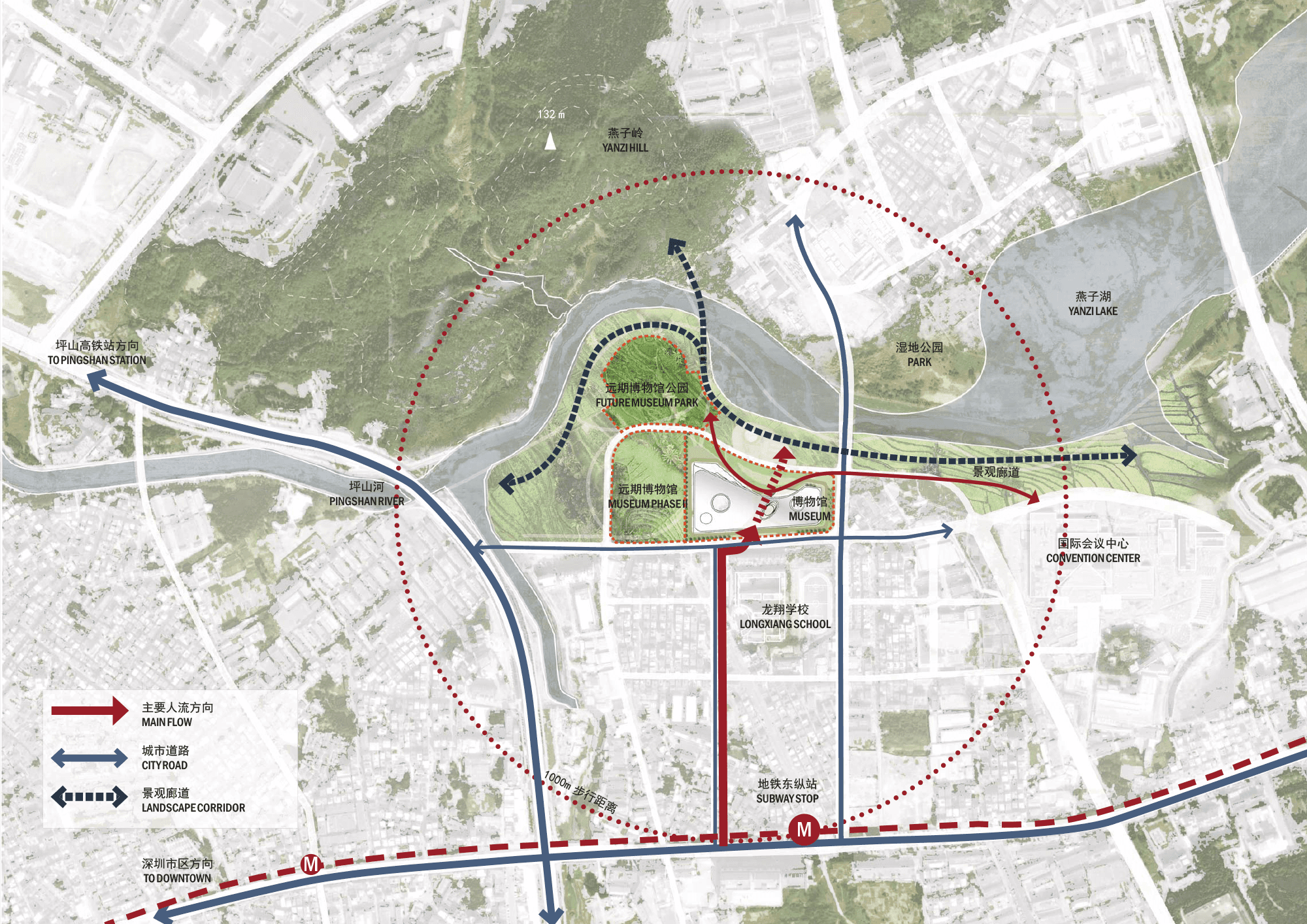
History as layers. Landscape as museum.Inspired by geological strata and rock formations, the architecture becomes a sculpted landform — a continuous green roof, carved circulation paths, and spatial voids acting as “erosions” where light, people, and stories flow. Exhibits sit within these layers like fossils preserved in stone — embedded, revealed, and discovered. The building becomes a timeline, physically expressing erosion, stratification, and the evolution of life, while connecting visitors from river to city, past to future, nature to human.


Impact
A civic landmark that blurs museum, park, and urban landscape — turning learning into a spatial journey. Visitors don’t just see history; they walk through it, touch it, and inhabit it. The building invites participation, discovery, and reflection — promoting environmental awareness and reinforcing the idea that we are both visitors and contributors to Earth’s continuing story. The result is an iconic cultural destination where architecture itself becomes a living archive of time, nature, and human evolution.